Falls and how to prevent them?

Falling over or feeling less steady than before? Fearful of falling? Then this article is for you. Read on to learn more about what you can do.

The Problem of Falls

Studies have shown that 1 in 3 seniors above 65 years old has had a fall in the past year. This statistic increases to 1 in 2 above the age of 85.

1 in 10 of these falls result in a serious injury such as a hip fracture. 1 in 2 of these seniors may never regain their mobility and independence.

Why do Seniors tend to Fall?

Seniors tend to fall more frequently due to a combination of physical, health, and environmental factors. Falls also tend result in more serious injuries including fractures and long hospitalisations.

Here are some key reasons:

1. Decline in Muscle Strength (Sarcopenia):

As people age, they often lose muscle mass and strength, a condition called sarcopenia. Weaker muscles make it harder to maintain balance, and an older person may be more prone to falling when they lose their footing or need to react quickly to avoid an obstacle.

2. Decreased Balance and Coordination:

Ageing affects the nervous system, which controls balance and coordination. Older adults may have slower reaction times, difficulty adjusting to shifts in position, or less stability when standing or walking, making them more vulnerable to falls.

3. Vision Problems:

As we age, our vision can deteriorate due to conditions like cataracts or age-related macular degeneration. Poor vision can make it harder to see obstacles, stairs, or uneven surfaces, increasing the risk of tripping or stumbling.

4. Chronic Health Conditions:

Certain conditions common in older adults—such as arthritis, diabetes, Parkinson’s disease, and heart disease—can affect mobility and increase the risk of falling. For example, Parkinson’s disease can cause tremors and difficulty walking, while arthritis can make it painful to move properly.

5. Medication Side Effects:

Many older adults take multiple medications, some of which can cause dizziness, low blood pressure, or drowsiness. These side effects increase the likelihood of falls. For example, medications for blood pressure, antidepressants, or sedatives can make individuals feel lightheaded or less stable.

6. Osteoporosis and Fragile Bones:

Older adults, particularly women, are at greater risk of osteoporosis, which weakens bones and makes them more likely to fracture if a fall occurs. A fall that might only cause a bruise in a younger person can result in a serious bone injury in an older person.

7. Reduced Physical Activity:

Lack of regular exercise can contribute to muscle weakness, poor balance, and slower reflexes. Many older adults become less active due to health concerns or fear of falling, which can create a cycle that increases their fall risk.

8. Environmental Hazards:

Many falls are caused by environmental factors, such as slippery floors, uneven sidewalks, poor lighting, or cluttered living spaces. Older adults may not be as quick to notice or avoid these hazards, leading to a greater likelihood of falling.

9. Cognitive Decline:

Dementia or cognitive decline can impair a person’s ability to judge distances, remember to use assistive devices like walkers or canes, or recognize potential hazards. This can increase the risk of falls.

10. Dehydration and Nutritional Deficiencies:

Dehydration or deficiencies in important nutrients like vitamin D or calcium can affect balance, muscle function, and bone health, making falls more likely.

In summary:

Falls in older adults are often the result of a combination of these factors. Addressing some of these, such as improving strength through exercise, addressing vision problems, or making environmental changes at home, can significantly reduce the risk of falls.

What can I do to Prevent a Fall?

1) Ensure your home is safe

As 70% of falls occur within the home, ensuring our home environment is safe is essential.

The following infographic suggests some ways you may adapt your home to make it safer.
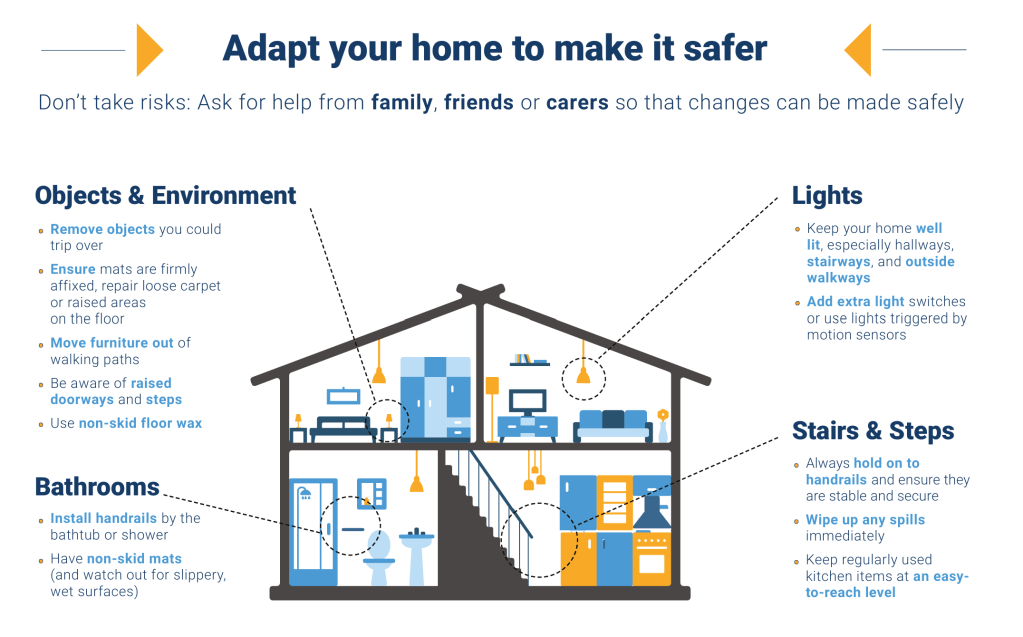
If you are staying a HDB flat in Singapore, you may be eligible for government subsidised home modifications under the HDB EASE programme. This includes installation of grab bars and shower chair, installation of ramps and lowering of kerbs, and application of slip-resistant chemical treatment to tile flooring.

Source: https://images.app.goo.gl/rQ1zqLTBR933qSaq8

Refer to the HDB EASE website for more details.

2) Wear appropriate footwear

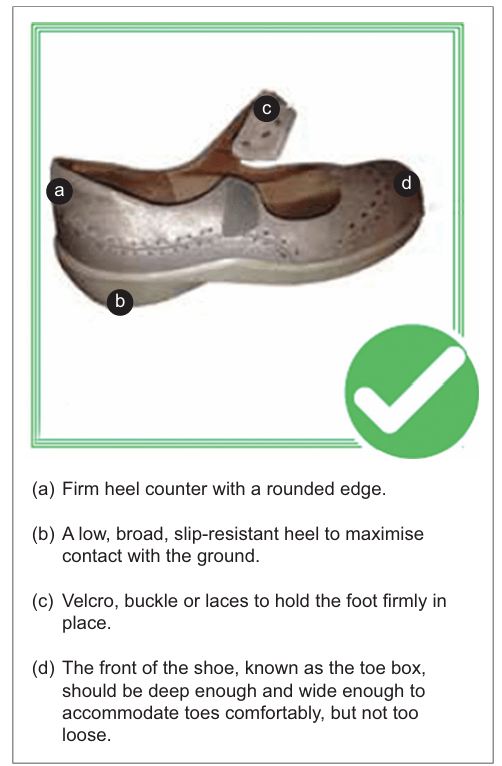
Footwear can cause falls if it doesn’t fit well, is slippery, or doesn’t support the feet properly. Shoes that are too loose or tight can make walking harder and lead to tripping. High heels can make you unsteady and more likely to fall. Shoes with slippery soles or no grip can cause slipping, especially on smooth or wet floors. Flip-flops and backless shoes don’t stay on well, making it easy to trip. Wearing the wrong shoes for activities, like walking in sandals on rough ground, also increases risks.

To avoid falls, wear well-fitting shoes with good grip and support.
Source: http://www.smj.org.sg/sites/default/files/SMJ-61-116.pdf

3) Know your medication

Medications can increase fall risk by causing dizziness, low blood pressure (orthostatic hypotension), muscle weakness, or impaired cognition. Drugs like sedatives, antidepressants, antihypertensives, and opioids may lead to drowsiness, confusion, or slower reflexes, while others, such as antihistamines, can blur vision. Polypharmacy (using multiple medications) can amplify these effects.

To reduce risks, regularly review medications with a doctor, monitor for side effects, and avoid unnecessary drugs. Stay hydrated and rise slowly to prevent dizziness. Common culprits include sleeping pills, blood pressure medications, and painkillers.

Source: https://www.seniorsafetyreviews.com/medications-increase-risk-of-falling/

4) Check your vision regularly

Poor vision can make it harder to see obstacles, uneven ground, or judge distances, leading to falls. Trouble judging steps or objects might cause tripping. Limited side vision can make it hard to notice things nearby. Blurry vision or eye problems like cataracts can hide dangers, and bright lights or darkness can make moving safely difficult. Seeing double or slow eye movements can also affect balance. Moving between light and dark areas can be confusing.

To stay safe, get regular eye check-ups, wear the right glasses, use good lighting, and keep spaces clear of clutter.

5) Engage in regular strength and balance exercises

Strength and balance training helps prevent falls by making your muscles stronger and improving your ability to stay steady. Stronger legs help you stand, walk, and climb stairs more safely. Better balance helps you avoid tripping or stumbling. Regular strength and balance training teaches your body to react quickly if you lose your balance, so you are less likely to fall.

Some examples of balance exercises include standing on one leg, walking heel-to-toe, walking sideways and backwards. For best benefit, you should feel slightly unsteady while doing the exercises but not as though you are about to fall. Perform these exercises near a stable support for safety but avoid relying on hand support.
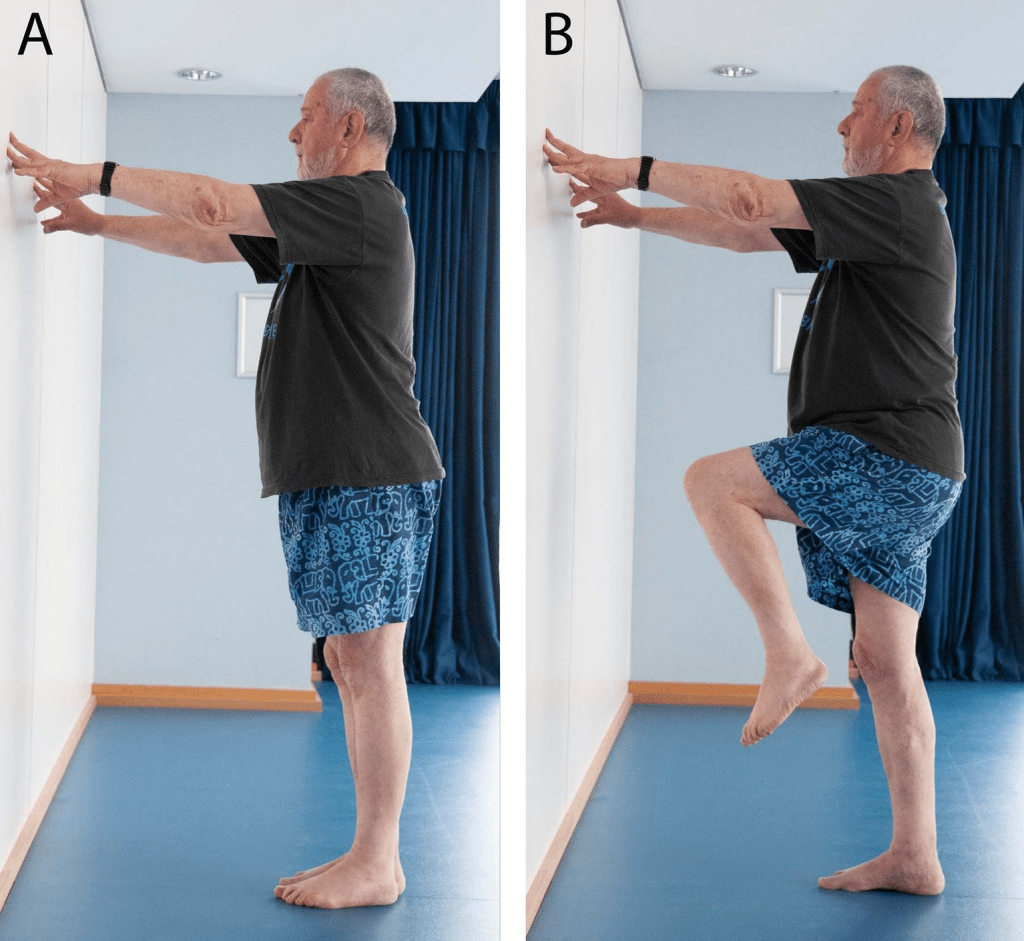
Standing on one leg

Stand near a wall with your feet slightly apart. Hold lightly onto the wall if you need to. Lift up one leg, keep your supporting knee soft.


Aim to hold for 10 seconds. Repeat 10 times on each side.

Heel-Toe walk

Stand near a wall with your feet hip width apart. Place one foot directly in front of the other, landing with your heel first then toe. Avoid locking your knees as you take 10 steps forward.

Repeat 3 times.

Source: https://www.nhs.uk/live-well/exercise/balance-exercises/

Doing these exercises 3 times a week helps your body stay steady and strong, keeping you safer in your daily life.

For a more customised strength and balance programme, Contact Us to arrange an appointment.
How to age well

This article explains how ageing is related to sarcopenia and frailty, and what we can do to prevent or manage it and age well.


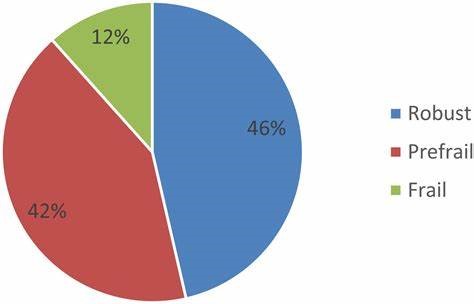
Most people who are inactive and above the age of 70 may start to feel slowed up, low energy or weak. In Singapore, studies show about 1 in 2 seniors (above 65 years old) are in a state of frailty or pre-frailty.

Source: Singapore Healthy Older People Everyday (HOPE) Study: Prevalence of Frailty and Associated Factors in Older Adults – Journal of the American Medical Directors Association

What is Frailty and Sarcopenia?

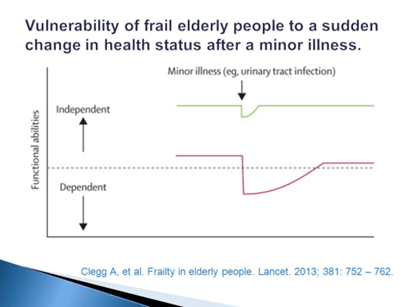
Frailty is a state of vulnerability to minor stressors due to a lack of reserve or resilience. Think of it like a car that’s been used for many years: it might still work, but it needs more care and attention because the parts are worn out, and it doesn’t run as smoothly as it used to. Those with frailty may need extra help or support to stay healthy and safe.

A urine infection or flu for a healthy robust individual may mean feeling slightly weaker and low in energy but still being able to care for oneself.  For someone with frailty, usual walking may already be slow, sometimes requiring the use of a walking aid. A minor illness may cause the body to feel even weaker, resulting in increased difficulty standing up and requiring physical help to move around. If the individual is not careful or does not have help, he may fall and break a bone, this may cause a long hospitalisation stay and possibly a downward spiral towards disability and death. Frailty also makes it harder for someone to recover, often taking a longer period and sometimes never making it back to baseline function.

What causes frailty?

Local studies show that malnutrition, lack of exercise and chronic disease are the main reasons why people develop frailty.

Sarcopenia, or the loss of muscle mass, strength and function is a central factor in the development of frailty. Sarcopenia undermines the body’s physical reserves, which are essential for maintaining independence and resilience against health challenges.

To a certain extent, sarcopenia is natural process which occurs with ageing. Typically, our body has the most muscle mass during our 20’s, after which muscle mass gradually declines by about 3-5% each decade. The rate of muscle loss accelerates at about 70 years of age, around the time where most people exhibit signs of frailty.

Source: (PDF) Of Greek Heroes, Wiggling Worms, Mighty Mice, and Old Body Builders

The pictures below show thigh muscle cross-section views of two individuals, the left belonging to a young healthy person, the right, belonging to an older person who is sarcopenic and has very little muscle.

How do I know if I have Sarcopenia?

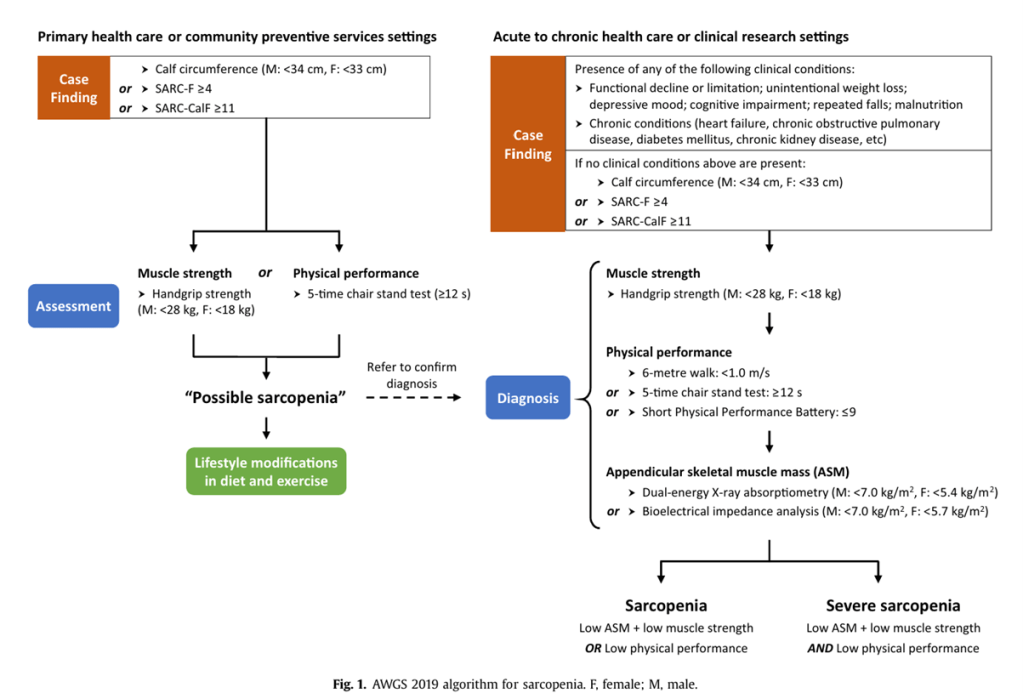
There are several simple tests which may point to a likelihood of sarcopenia.

One example which looks at muscle physical performance would be the 5 times sit to stand test.

Place a steady chair against the wall. Have a family member or friend measure the time taken for you to complete 5 sit to stand’s as quickly as you can. A duration of more than 12 seconds points towards poor physical performance and possible sarcopenia.

If you have access to a handgrip dynamometer or if your health provider has done that with you, a maximum grip strength of <28kg for males and <18kg for females points towards poor strength.

Poor muscle strength or poor physical performance indicates possible sarcopenia where lifestyle interventions should commence.

Further testing and diagnosis are usually not necessary and are usually only used for research purposes.

Source: Asian Working Group for Sarcopenia: 2019 Consensus Update on Sarcopenia Diagnosis and Treatment – ScienceDirect

How can I prevent or manage Sarcopenia and Frailty?

Studies show that maintaining a healthy balanced diet with adequate protein intake and engaging in regular resistance exercises gives us the best chance at preventing and reversing sarcopenia and frailty.

What is a healthy balanced diet with adequate protein intake?

The Healthy Plate visual, developed by the Health Promotion Board, is one way to check if we are eating a balanced meal.

  • Fill one Quarter plate with wholegrain carbohydrates such as brown rice or wholemeal bread
  • Fill one Quarter plate with good sources of protein such as lean meat, fish, eggs or tofu
  • Fill Half plate with fruit and vegetables.

Protein is crucial for preventing sarcopenia (muscle loss) and frailty because it helps build and repair muscles, which naturally decline with age. Protein also helps slow muscle breakdown and supports metabolism, keeping the body active and healthy. Adequate protein helps maintain muscle mass, strength, and overall well-being as we age.

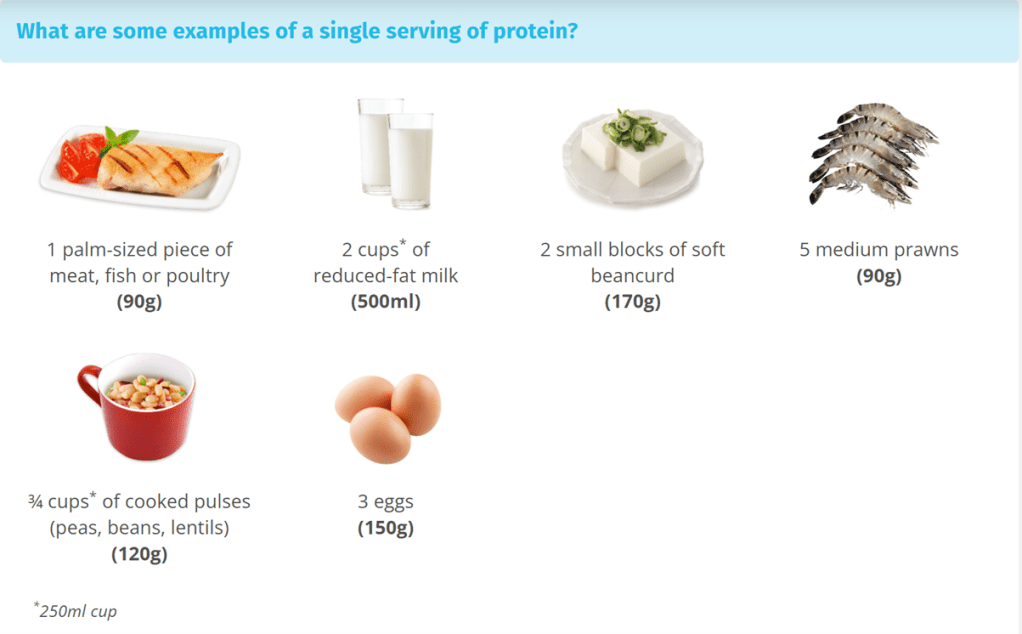
The below infographic shows some examples of a protein serving. Seniors should aim for at least three servings of proteins each day.

Source: Nutritious Foods For A Healthy Diet

Exactly how much protein should I consume a day?

It is generally recommended for a senior to consume protein equivalent to their body weight in grammes each day.

For example, if Mr Tan is 60kg, he should consume at least 60g of protein each day. A sample meal plan for Mr Tan could be as below.

MealProtein sourceProtein (g)
Breakfast1 glass low fat high calcium milk (250ml)8
2 whole eggs14
Lunch1 palm sized piece of fish, chicken or lean meat (90g)18-24
Tea break1 glass low fat high calcium milk (250ml)8
Dinner2 small block bean curd (170g)18
Total66-72

Disclaimer- Restricted protein intake may be recommended for some health conditions such as chronic kidney disease. Seek advice from your doctor or dietitian for personalised recommendations.

What are Resistance Exercises and how often to perform?

Resistance exercise is a type of exercise which focuses on improving strength. This involves pushing, pulling high loads for short periods. Resistance loads may be dumb bells, resistance bands, gym machines or even your own body weight.

We should aim to do 8-10 exercises targeting our major muscle groups around our arms, chest, stomach, legs and back. The same action should be repeated 8-15 times with good posture. The last repetition should be difficult to complete due to fatigue. Complete 2-3 sets within each session.

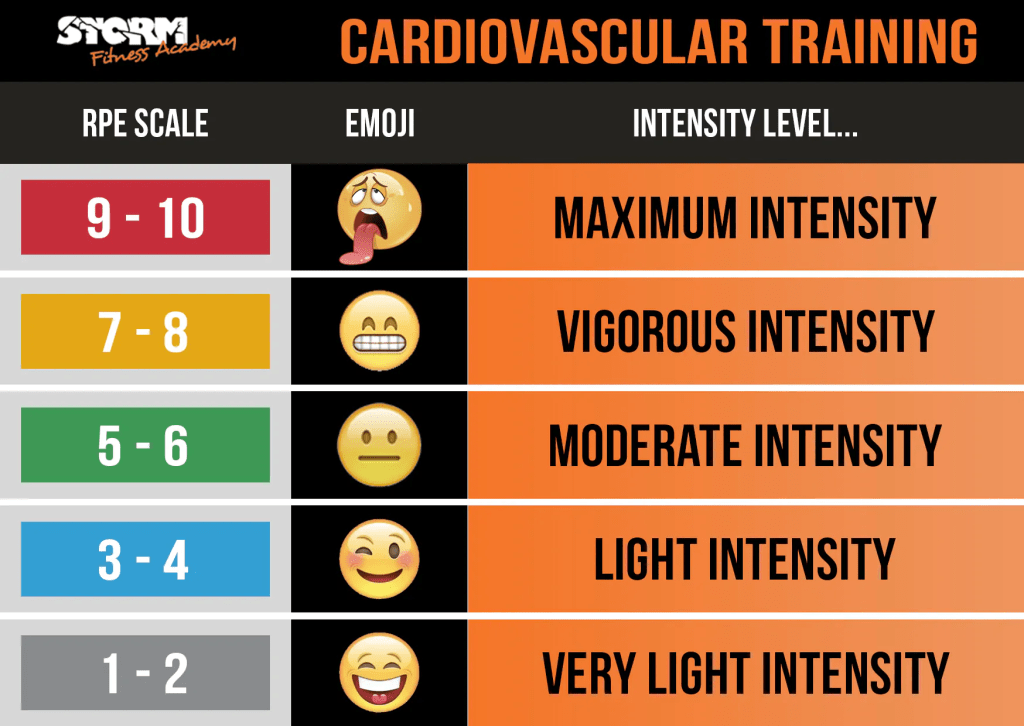
If you are just starting to exercise, you should start with an effort of about 5-6 upon 10, with 0 being no effort and 10 being the hardest effort possible. The load should be increased over time such that it feels like an 8 out of 10.

Source: https://www.stormfitnessacademy.co.uk/blog/rate-of-perceived-exertion-rpe-cardio-training/

Strengthening exercises should be performed at least 2x/week. Some muscle soreness is expected the day after if the muscles are adequately challenged. Leave at least one rest day between each exercise session.

Exercises should be pain free and should not exacerbate any joint issues. If they do, please consult our physiotherapist for more personalised recommendations.

What are some examples of Resistance Exercises?

If you are already having difficulty standing up from chairs or from the floor, sit to stand may be a simple exercise to do at home.

Place a steady chair against a wall for safety. The chair height should be low enough for you to feel some effort when getting up but not too low that you need to push off excessively with your hands.

Sit with your buttocks halfway out and your ankles slightly behind your knees, feet hip width apart. Lean forward and push through your hips to stand up straight. To sit, lean forward slightly, pushing your hips slightly back, aiming for the middle of the chair, lower your buttock down with control. Perform as many times as you can.

If you were able to complete more than 20 reps, progress to a lower chair for a better challenge.

If you were able to complete 8-15 reps with the last repetition being difficult, this exercise is perfect for you!

How soon should I feel stronger?

Muscle adaptations should occur within 1-2 weeks of practice. Actual strength gains may take about 4-6 weeks. Exercises should be progressed every 2 weeks or so. Progression may be by

  • Increasing reps
  • Increasing difficulty of exercise eg. Using a lower chair or performing the same sit to stand with one leg supporting instead of two legs
  • Adding weights eg. Carrying dumbbells close to your chest
  • Performing more sets or having more regular training sessions each week

What should I do if I want more personalised advice?

Where possible, it is best to target sarcopenia or muscle weakness early before it progresses to frailty.

Support from a physiotherapist may be necessary to maximise your strength gains and regain your mobility and independence after an acute medical event.

Contact us to arrange a home visit and our physiotherapist will be happy to help!